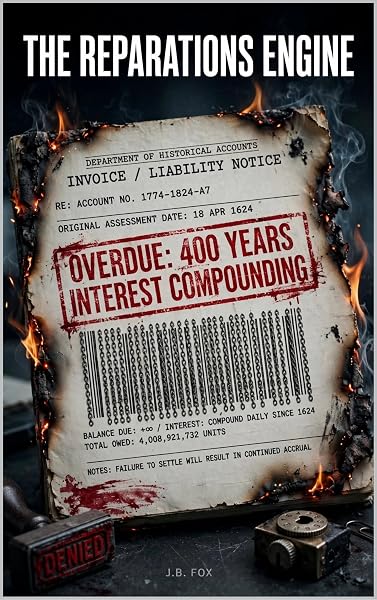
The Reparations Engine
What If We Could Actually Invoice History? A Political Thriller About AI, The UN, and Who Owes What
VERITAS NUMERANDA. The truth must be made countable. Secretary-General Amara didn't campaign on reparations. She campaigned on process. Her solution: The Department of Historical Justice. 109 banker boxes of complaints in the basement of the Palais des Nations. 400 historians. A cipher lock. And a Zurich supercomputer leased to answer one impossible query: WHO IS OWED, NET, WHEN ALL SYSTEMS ARE COUNTED?
It was supposed to be fair. Every transaction traced. Every hand billed. Every cent compounded. Then a 70-year-old Chinese schoolteacher named Zhang Wei files a claim for the Opium Wars, perfectly formatted, correctly sourced, with a 40-page methodological note. And he writes: "You have built an instrument that can trace a payment across four centuries and cannot see a war."
What happens when you build a machine that can see every transaction but not a single cause? What happens when history itself is properly formatted? THE REPARATIONS ENGINE is a darkly comic, terrifyingly plausible satire for anyone who has ever watched a bureaucracy try to solve a moral problem with a spreadsheet. For fans of Catch-22, Black Mirror, The Trial, and The Ministry for the Future.
If you think you know how the reparations debate ends, you haven't seen the invoice.